Two Months Later, Holding Venezuela Close
A Two After the Earthquakes
It has been more than one month since two powerful earthquakes struck northern Venezuela on June 24.
In the first days, the story was rescued. Collapsed buildings. Families are searching for names. Volunteers move food, water, medicine, and information through damaged streets.
Now, the story has recovered.
The Associated Press reports that La Guaira, one of the hardest-hit areas, is still facing unsafe homes, dust, rubble, sanitation risks, water needs, and interrupted health care.
The New York Times reported that more than 24,000 people were left homeless in La Guaira. Buildings, schools, sports spaces, beach clubs, and resorts have become shelters, field hospitals, volunteer camps, supply points, and places for grief.
A Glimpse of the Ongoing Reality
For Kirchner Marketing, this is still personal.
We are a team-centered company. Some of our team members are in Caracas. Others have family, friends, and deep ties across Venezuela.
So, we are not watching from a distance.
We are hearing from people we know.
We are hearing what it felt like when the ground moved. What it felt like when the second earthquake came stronger. What it felt like to return to coffee, family, work, and routine while knowing so many others lost those same ordinary things.
Fabiana Ruiz said the first earthquake left her unsure of what was happening. Then the second one began, stronger, and everything became clear.
“This is out of my hands, please God protect us all,” she remembers thinking.
The days after felt strange. There were aftershocks. There was constant news. There was a slow return of daily life besides the work of helping people who lost their family, homes, and belongings.
For Fabiana, gratitude now feels quieter. Coffee at home. Walking the dogs. Eating at the table with family. Working. Ordinary things feel less automatic.
Nina Angulo remembers the fear in her body.
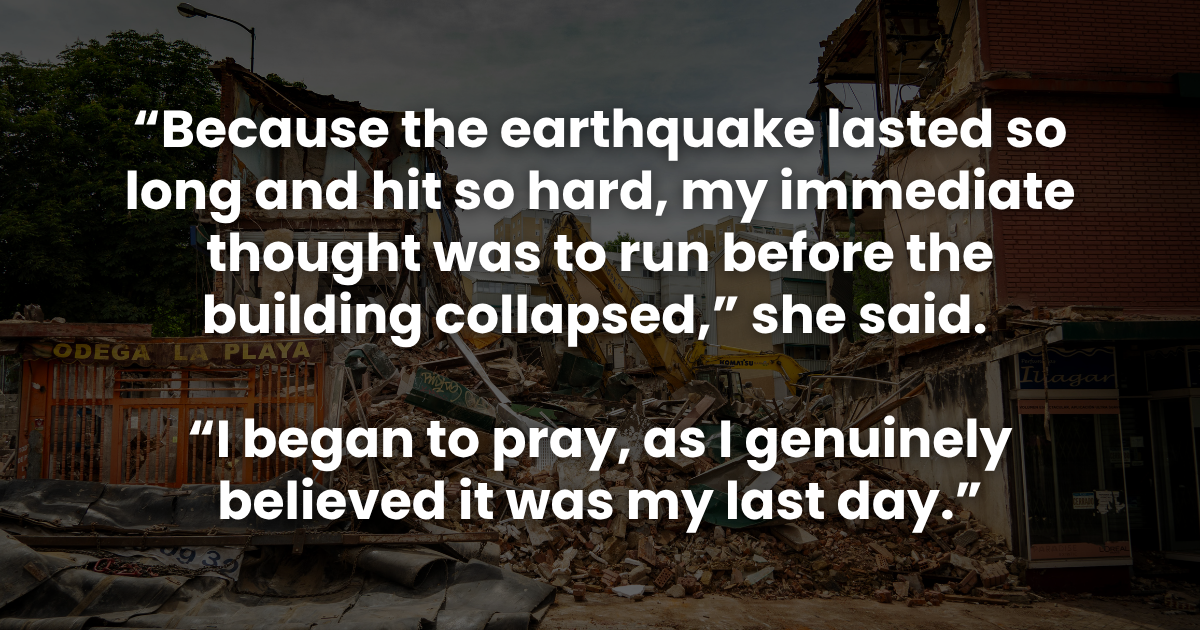
“Because the earthquake lasted so long and hit so hard, my immediate thought was to run before the building collapsed,” she said. “I began to pray, as I genuinely believed it was my last day.”
The first week stayed tense because of the aftershocks. Nina was safe, but safety did not erase what she saw. Many people lost everything. Many were trapped. Many did not survive.
That is what disasters do.
It makes life feel fragile.
It makes ordinary moments feel sacred.
It shows how much people still need after the first wave of attention fades.
A Two Later: The Need Has Not Passed
The first days after a disaster ask for urgency.
The weeks after ask for endurance.
People still need:
- Clean water
- Shelter
- Medical care
- Sanitation
- Tools to clear rubble
- Support to search, grieve, rebuild, and rest
What Humanitarian Groups Are Reporting
Doctors Without Borders reported Thousands of displaced people still lack adequate shelter, clean water, and sanitation. Its response now includes mobile clinics, mental health support, water and sanitation work, and outreach to displaced communities.
All Hands & Hearts reported that families are still searching for loved ones and living in tents outside their homes or in displacement camps without electricity. The organization also named ongoing needs for clean drinking water systems, shelters, safe education spaces for children, refrigerators for medicine, power tools, and local recovery support.
This is why help still matters.
Recovery is not one moment.
It is a long line of needs changing every day.
The Quiet Work Continues
In our first blog, we wrote about the quiet work of showing up.
Two months later, that work will continue.
It looks like doctors treating people in crowded clinics.
It looks like volunteers delivering water.
It looks like families are sharing updates from one phone to another.
It looks like people sleeping near damaged buildings because someone they love is still under debris.
It looks like children being cared for in shelters.
It looks like Venezuelans inside the country and across the diaspora refusing to let the work stop.
Humanity in Action
Nina said it was deeply moving to see people pitch in with whatever they had, including international organizations. Fabiola called it “the purest form of love and patriotism” she had ever witnessed.
Strangers help strangers.
People are offering what they have.
Care moves faster than certainty.
That is the story we want to keep sharing.
Not because it erases the loss.
Because it honors what people are still carrying.
Why the Help Still Needs to Continue
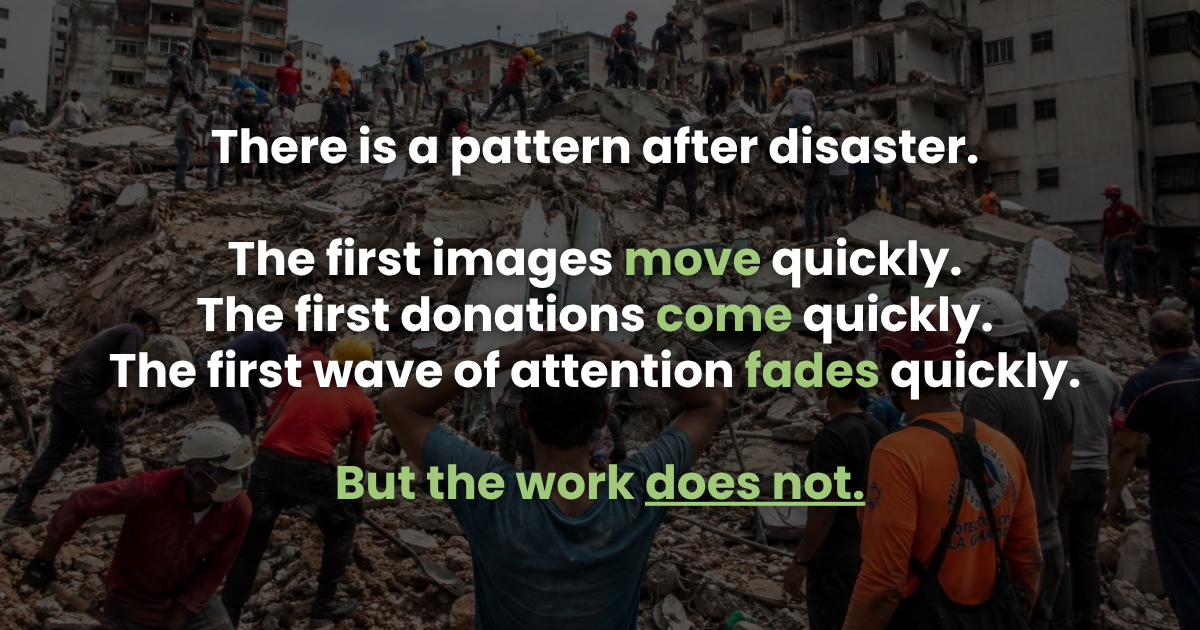
There is a pattern after the disaster.
The first images move quickly.
The first donations come quickly.
The first wave of attention fades quickly.
But the work is not
The Associated Press reports that safe drinking water remains one of the biggest challenges. Unsafe water, limited sanitation, crowded shelters, and disrupted health services increase the risk of illness.
MSF also reports That water, sanitation, and hygiene remain among the biggest concerns in affected areas.
The New York Times reporting adds another layer: many survivors are still waiting for certainty. Some do not know where they will live. Some are afraid to return to tall buildings. Some are staying near rubble because leaving would feel like abandoning the people they lost.
What Support Still Means
This is why support needs to continue beyond the rescue phase.
Food matters.
Water matters.
Hygiene matters.
Medicine matters.
Mental health support matters.
Safe spaces for children matter.
Shelter matters.
Documentation matters.
Local trust matters.
Transparency matters.
Help still has somewhere to go.
Where to Donate
If you want to help, we encourage you to give through trusted channels with clear information about where funds go.
Start here:
This direct donation page supports families affected by the earthquake. Our team is sharing this link because it connects to Venezuelan-led initiatives with transparency practices and documentation.
Other trusted organizations (as listed by AP):
Before You Donate
Before giving, look for clear answers:
- Who receives the funds?
- How will the funds be used?
- Who is distributing aid on the ground?
- Does the organization have experience in Venezuela or disaster response?
- Does it share updates, documents, or public reporting?
AP also cites Charity Navigator guidance to help avoid fraudulent campaigns by checking transparency, experience, and verified nonprofit status.
Read AP’s donation guidance.
Clarity Means Saying the Need Is Still Here
Kirchner Marketing believes clarity is an act of care.
One month later, clarity means saying the need is still here.
It means refusing to treat recovery as old news.
It means listening to survivors.
It means honoring the volunteers, doctors, neighbors, families, and local organizers who continue to show up.
It means holding our team members in Caracas close.
It means holding Venezuela close.
If you are able, please donate.
If you are unable to give it, please share trusted information.
The first month has passed.
The work has not.