
Make Your Marketing Easier To Manage
You know how to help your clients.
Finding the words to explain it can be harder.

You spend an hour writing an email or ask AI to help. Either way, you’re unsure what will make people open it.
WEBSITE
Your website needs work. You’re just not sure if it’s the words, the design, or how people find it.
SOCIAL MEDIA
You have ideas, but client work comes first. You post when you can and wish you had a plan.
YOUR TEAM
Your coordinator, VA, or AI assistant needs direction. Without it, you end up rewriting work that doesn’t sound like you.
You want the right people to find your business, understand what you offer, and feel confident choosing you. You also want marketing to take up less of your day.

Your marketing gets easier to manage when you know what to say, where to focus and what to do next.
Why marketing can take so much effort
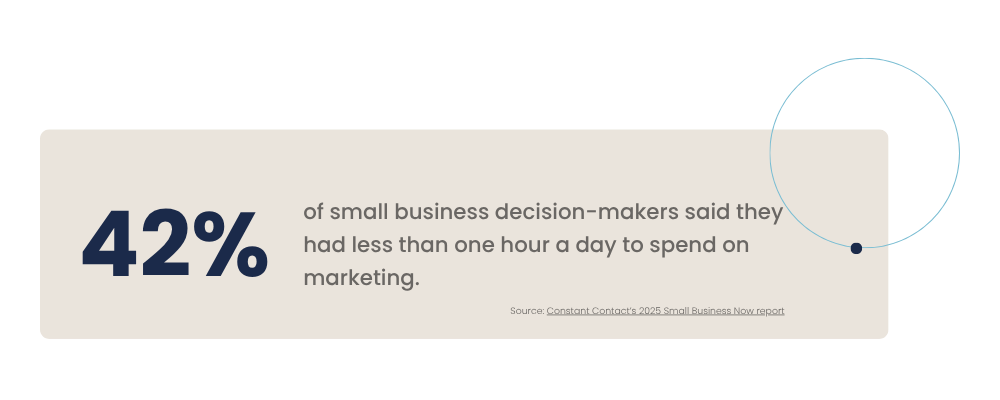
Finding time for marketing is a real constraint. In Constant Contact’s 2025 survey of 2,500 small business decision-makers across four countries, 42% said they had less than one hour a day to spend on marketing. Their top frustration was not knowing what was working.
With limited time, you need a clear way to decide what deserves your attention.
But even creating one email involves several decisions. You need to know who it’s for, what matters to that person, how your service helps, and what you want them to do next.
If you haven’t settled those questions, writing the email means figuring them out. Then your next social post or website update brings you back to the same questions.
Your coordinator, VA, or copywriter needs those answers, too. Without them, everyone makes their own choices. You spend time reviewing and rewriting work that took hours to create.
When you document those decisions, everyone has something to work from. You can spend less time explaining your business and more time putting your marketing to use.

THE FRAMEWORK
What are the five layers of marketing?
At Kirchner Marketing, we organize this work into five layers. These layers help us review what’s working, find what’s missing, and focus on what your business needs.
They cover three connected jobs:
-
Branding defines who you serve and why clients choose you.
-
Messaging puts that value into words.
-
Marketing in Action shares those words through your website, emails, and other marketing, with systems and ongoing direction to keep the work moving.
The order matters because each layer gives direction to the work that follows. Your website team needs your message. Your coordinator needs priorities before creating a calendar. Your AI tools need information about your business before they can produce useful drafts.
You may already have several pieces in place. The purpose is to understand what needs attention before adding more work or spending more money.
LAYER 1 OF 5

Brand Foundation
Know who you serve and why clients choose you
When you sit down to write, you need a clear picture of the person you want to reach.
Your brand foundation helps you define your best clients, what they need and what makes your business a good fit. It also captures your personality and the experience clients can expect from you.
EXAMPLE
For example, an accounting firm may offer bookkeeping and tax preparation. But clients might choose it because the team explains their numbers clearly, answers their questions, and helps them plan ahead.
Those reasons give the firm something meaningful to communicate beyond a list of services.
HOW THIS HELPS YOU
You can explain your value more clearly and give your team a shared understanding of who you want to reach.
TRY THIS
Ask three clients why they chose you and what they value most about working with you. Look for reasons they mention more than once.
LAYER 2 OF 5

Messaging
Know what to say
You may understand your value and still struggle to explain it.
Messaging turns that understanding into a clear story, core messages, and language for your services. It connects what you do with what your clients want to accomplish.
Your team can use that language when writing a website page, introducing your business, or creating an email.
You won’t say exactly the same thing everywhere. But people should get a consistent understanding of your business wherever they find you.
EXAMPLE
For example, the accounting firm from Layer 1 might describe its services as “comprehensive financial solutions.” That phrase leaves a reader guessing what they get.
Messaging turns the reasons clients choose the firm into plain words: “We explain your numbers in plain language and help you plan ahead.”
Now the website, a welcome email, and a social post all start from that sentence. Each one says it a little differently, and readers still get the same message.
HOW THIS HELPS YOU
You spend less time writing from scratch and correcting copy. Your coordinator, VA, and AI tools have clear language and examples to work from.
TRY THIS
Compare your website introduction, social media bio, and a recent email. Check whether they consistently explain who you help and the value you offer.
LAYER 3 OF 5

Marketing in Action
Help people find you and take the next step
This layer brings your message to life through your website, emails, social media, service pages, and other marketing materials.
Each piece needs a purpose.
Your website should help potential clients understand your services and how to get started. An email might explain a common problem and invite a conversation. A social post might introduce your approach or answer a question clients often ask.
People may visit several places before contacting you. BrightLocal’s 2026 Local Consumer Review Survey found that 54% of respondents said they would visit a business’s website after reading positive reviews. Another 24% would visit its social media channels.
A positive review can give someone a reason to learn more. Your website then needs to help them understand whether your services fit their needs.
Clear messaging, useful design, search visibility, and an easy way to contact you each play a part.
Before you change the design, get clear on your message. Then review what else needs attention.
EXAMPLE
For example, the accounting firm might write a LinkedIn post about the numbers an owner should check each month. An email might explain what to bring to a first meeting. The service page explains how ongoing support works.
Each piece has one job, and all three start from the same plain words the firm created in Layer 2.
HOW THIS HELPS YOU
Your marketing gives people useful information and a clear next step. Your team knows what each piece needs to accomplish.
TRY THIS
Review your website's main service page. Make sure someone can understand who the service helps, what it helps them do, and how to get started.
LAYER 4 OF 5

Marketing Systems
Keep marketing moving when client work gets busy
Knowing what to say doesn’t automatically give you time to say it.
Marketing systems give recurring work a process, schedule, and owner. That might mean planning content ahead, setting up welcome emails, or agreeing on how your team creates and approves posts.
INSTEAD OF
Asking your assistant to “post more”
YOU GIVE THEM
Approved topics, examples of your voice, and a clear review process
AI can help with parts of the work when you provide your brand information, messaging, and instructions. Someone still needs to check the result for accuracy and fit.
EXAMPLE
For example, the accounting firm sends a monthly email. The owner might handle every step alone, or share the work with others.
Either way, the firm gives each step a date. It picks the topic by the first of the month, writes the draft by the tenth, and approves the final copy by the twentieth. Those dates go on the calendar, so the email goes out even in a busy tax week.
HOW THIS HELPS YOU
You reduce repeated work and make it easier to delegate. Your team has a process to follow when other responsibilities need your attention.
TRY THIS
Choose one marketing task you repeat often. Write down the steps, decide who owns it, and set a realistic schedule.
LAYER 5 OF 5

Marketing Strategy and Growth
Know where to focus next
Marketing is not a one-time project.
It works best as a regular part of your business, and it changes as your business changes.
Let your goals, audience, and budget guide your marketing from the start. This layer adds two things: a regular review of your results and one person who leads the work.
That person sets priorities, checks progress, and adjusts the plan.
Check what each activity costs you and what it brings back. If an activity takes hours and does little for your goals, find out why before you keep doing it. If one service brings in more of the clients you want, decide whether to give it more attention.
Look beyond single numbers too. Email opens do not tell you whether people understand your offer or become clients. Connect each activity to a result your business needs, such as more clients who fit you.
EXAMPLE
For example, the accounting firm picks one goal: more consultation requests from owners who need help understanding their numbers. Each month, it checks how many people reached out, whether they fit, and what happened after the first call.
If the review shows that LinkedIn posts bring more fitting requests than the newsletter, the firm spends more time on LinkedIn next quarter.
HOW THIS HELPS YOU
You have a clearer reason for where you spend your time and money, with someone responsible for keeping the work focused.
TRY THIS
Ask new inquiries how they heard about you. Record their answers and whether they become clients. Review that information alongside your other results.
START WHERE YOU ARE
You Don’t Need to Start Over
YOU HAVE THE FOUNDATION
You may already know your best clients and why they choose you. Your next step could be clearer service descriptions.
YOU HAVE A WEBSITE
You might have a website you love, but you need it to connect with potential clients.
YOU HAVE ACTIVITY
You may have plenty of marketing activity and need help deciding what’s worth continuing.
Check whether the earlier layers give your team enough direction. Then focus on the gaps that affect your goals.
The layers give you a way to investigate. They don’t mean every problem comes from unclear branding. Low email opens, for example, can involve your subject line, your list, or whether the email reaches the inbox. Posting inconsistently may reflect a lack of time or ownership.
Understanding the problem helps you choose a useful next step.
OUR APPROACH
How We Help

We start with what you want your marketing to accomplish and what you already have in place.
Then we work with you to find what’s missing. That might mean learning why clients choose you, clarifying your message, or creating a story and strategy your team uses.
We can bring that work to life through your website, emails, social media, and other marketing, or set up the processes and leadership to keep it moving.
You get support that fits your business and direction, tied to the results you want.
FAQ
Frequently Asked Questions
CAN WE HELP YOU
Get Clear on your next step
If you’re unsure what your marketing needs, let’s talk about your goals, what you’re doing now, and where you’re getting stuck.
We’ll discuss where Kirchner Marketing can help and whether we’re the right fit for your business.
NEXT IN THE SERIES
This is the first article in our five-layer marketing series.
Next, we’ll look more closely at Brand Foundation and how understanding why clients choose you can guide your marketing decisions.